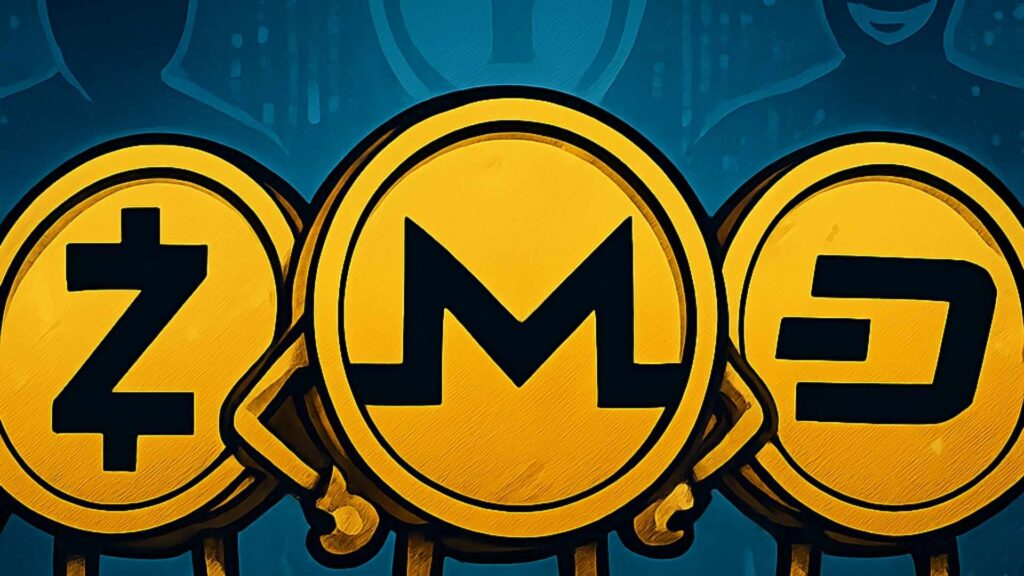
Over the past year, privacy coins have seen a strong market rally. This renewed attention has pushed many newcomers to try to understand what are privacy coins, and to research news and updates that could explain where the momentum is coming from.
As blockchain adoption grows, so does the importance of protecting financial activity from being fully exposed. While most cryptocurrencies are transparent by design, privacy coins aim to solve a different problem. They focus on keeping transactions confidential while still operating on decentralized networks.
This beginner’s guide explains what are privacy coins, how they work, and why they continue to attract attention during major market cycles.
What Are Privacy Coins?
So, what are privacy coins exactly?
Privacy coins are cryptocurrencies designed to hide or obscure transaction details such as the sender, the receiver, and the amount being transferred. Unlike traditional blockchains, where anyone can view transaction data, privacy coins add extra layers of protection.
The goal behind the creation of privacy coins is to give users stronger financial privacy while still benefiting from decentralization.
To simplify this even more, think about paying with cash versus using a credit card. Cash transactions are private, while card payments leave a detailed record. Privacy coins aim to bring that “cash-like” privacy to digital transactions.
How Do Privacy Coins Work?
Understanding how privacy coins work doesn’t require deep technical knowledge. In a nutshell, instead of showing who sent funds, who received them, and how much was transferred, privacy coins use advanced cryptography to hide sensitive information on the blockchain.
Here are the most common mechanisms used by privacy coins to encrypt or hide transaction data:
Zero-Knowledge Proofs (zk-SNARKs)
Zero-knowledge proofs allow a transaction to be verified without revealing who sent it, who received it, or how much was transferred. This advanced cryptographic method is used by Zcash (ZEC) for its shielded transactions and is considered one of the most powerful privacy tools in blockchain technology.
Ring Signatures
Ring signatures mix a real transaction with several decoy transactions, which makes it extremely difficult to determine who actually sent the funds. From the outside, all possible senders look equally valid. This mechanism hides the sender’s identity without affecting network’s ability to verify the transaction. Monero (XMR) is the most famous privacy coin using this mechanism as a core part of its privacy model.
Stealth Addresses
Stealth addresses are another key privacy feature used by Monero (XMR). A unique, one-time address is created for every transaction, even if the same recipient is paid multiple times. This prevents observers from linking transactions to a single wallet address.
Top Privacy Coins Right Now
Below are some of the top privacy coins currently drawing the most attention.
Zcash (ZEC)
Zcash was launched in 2016. It is currently one of the most talked-about privacy coins, using zk-SNARKs‘ advanced cryptography. Zcash allows users to choose between transparent and shielded transactions. This flexibility makes it appealing to users who want privacy without fully committing to it at all times.
Zcash news has been extremely positive in recent months. We’ve witnessed a significant increase in ZEC price, but also in the project’s development.
Monero (XMR)
Monero has been considered the leading privacy coin for many years. It uses a combination of ring signatures, stealth addresses, and Ring Confidential Transactions (RingCT) to hide transaction details.
Privacy in Monero is not optional, which is one of the reasons it is often cited as the most private cryptocurrency on the market.
Dash (DASH)
Dash focuses on fast payments and optional privacy. It offers a feature called PrivateSend, which improves user privacy by mixing transactions together before they are sent. This makes it harder to trace the origin of funds, although it does not provide the same level of privacy as coins like Monero or Zcash.
Dash is often seen as a hybrid between a payment-focused cryptocurrency and a privacy coin, making it appealing to users who want faster transactions with an added layer of anonymity.
Other Privacy Coins
Beyond the top three, several other privacy coins continue to attract attention. These include Decred, Horizen, and Verge. While they may not be as dominant, they still rank among the top privacy coins.
Why the Hype Around Privacy Coins?
One major reason for the renewed interest is growing concern over financial surveillance. As blockchain analytics become more advanced, many users are looking for ways to protect their transaction history.
Another factor is regulation. As governments increase oversight of crypto activity, privacy coins are seen by many as a way to preserve financial freedom in a digital world.
Finally, market cycles play a role. During strong rallies, investors often explore niche sectors, and privacy coins tend to resurface as attention shifts from mainstream assets to specialized use cases.
Bottom Line
So, what are privacy coins really about? At their core, they aim to restore financial privacy in an increasingly transparent digital economy. They are not designed to replace the traditional way crypto transfers operate, but to offer an alternative for users who value confidentiality.
While cryptocurrencies have always been about freedom and decentralization, privacy coins push this concept even further by providing anonymity. This is why privacy coins are likely to remain relevant, especially during periods of market growth and increased adoption.