
As the crypto space continues to grow, more people are looking to buy, sell, and trade cryptocurrencies for the first time. Crypto exchanges act as the main gateway between traditional money and cryptocurrencies. This is why it is essential to understand what are crypto exchanges before getting involved in crypto.
Choosing the wrong platform can lead to higher fees, security risks, or a confusing experience, especially for beginners.
This beginner-friendly guide explains what are crypto exchanges, how they work, and the key differences between centralized and decentralized platforms, so you can choose the right one for your needs.
What Are Crypto Exchanges?
Crypto exchanges are platforms that allow users to buy, sell, and trade cryptocurrencies. They connect buyers and sellers and provide the tools needed to exchange digital assets such as Bitcoin, Ethereum, and other cryptocurrencies.
To better understand this, think of a currency exchange booth at an airport. You give your local currency and receive another one at a set rate. Crypto exchanges work similarly, but instead of fiat currencies, they deal with digital assets.
Another useful comparison is a stock exchange. Just as stock exchanges allow people to trade shares of companies, crypto exchanges allow users to trade cryptocurrencies. Prices move based on supply and demand, and trades happen continuously.
There are two main types of crypto exchanges: centralized exchanges and decentralized exchanges. Each works differently and serves different types of users.
Centralized Exchanges
Centralized exchanges are crypto platforms operated by companies.
Centralized Exchanges Explained
Centralized exchanges, often called CEXs, are managed by a central organization that controls the platform. These companies handle user accounts, process trades, and hold users’ funds on their behalf.When you use a centralized exchange, you usually create an account using your email address, complete identity verification, and deposit funds. The exchange stores your crypto in its own wallets and allows you to trade through its interface.
These platforms are popular among beginners because they are easy to use. They often offer customer support, simple interfaces, and advanced tools for more experienced traders.
However, centralized exchanges require trust. Since the platform holds your funds, users rely on the company’s security practices and policies to keep their assets safe.
Top Centralized Exchanges
Some of the most well-known centralized exchanges include Binance, Coinbase, Kraken, OKX, and Kucoin. These platforms handle large trading volumes and support a wide range of cryptocurrencies.
Decentralized Exchanges
Decentralized exchanges are crypto platforms that run on blockchain networks.
Decentralized Exchanges Explained
Decentralized exchanges, or DEXs, allow users to trade cryptocurrencies directly from users’ wallets without relying on a central authority. Instead of a company managing trades, it is smart contracts that handle transactions automatically.
When using a decentralized exchange, the user keeps full control of his funds at all times. Trades happen on the blockchain, and no account creation or identity verification is required.
DEXs are built around the idea of self-custody and financial independence. This makes them appealing to users who value privacy and control over their assets.
On the other hand, the downside is that decentralized exchanges can be more complex for beginners. Users are responsible for their own wallets, security, and transaction fees.
Top Decentralized Exchanges
Popular decentralized exchanges include Uniswap, PancakeSwap, Curve, and SushiSwap. These platforms are widely used in the DeFi ecosystem.
Centralized vs Decentralized Exchanges: Key Differences
| Feature | Centralized Exchanges | Decentralized Exchanges |
| Control of funds | Exchange controls funds | Users control funds |
| Ease of use | Beginner-friendly | More technical |
| Security model | Trust-based | Smart contract-based |
| KYC requirements | Usually required | Usually not required |
| Fees | Trading and withdrawal fees | Network and protocol fees |
| Best for | Beginners and active traders | Experienced and privacy-focused users |
Centralized exchanges offer simplicity and convenience, making them a popular starting point for new users. They provide familiar interfaces and support services, which reduces the learning curve.
Decentralized exchanges focus on autonomy and transparency. While they require more technical knowledge, they eliminate the need to trust a central entity and allow users to have full ownership of their assets.
How Do Crypto Exchanges Work?
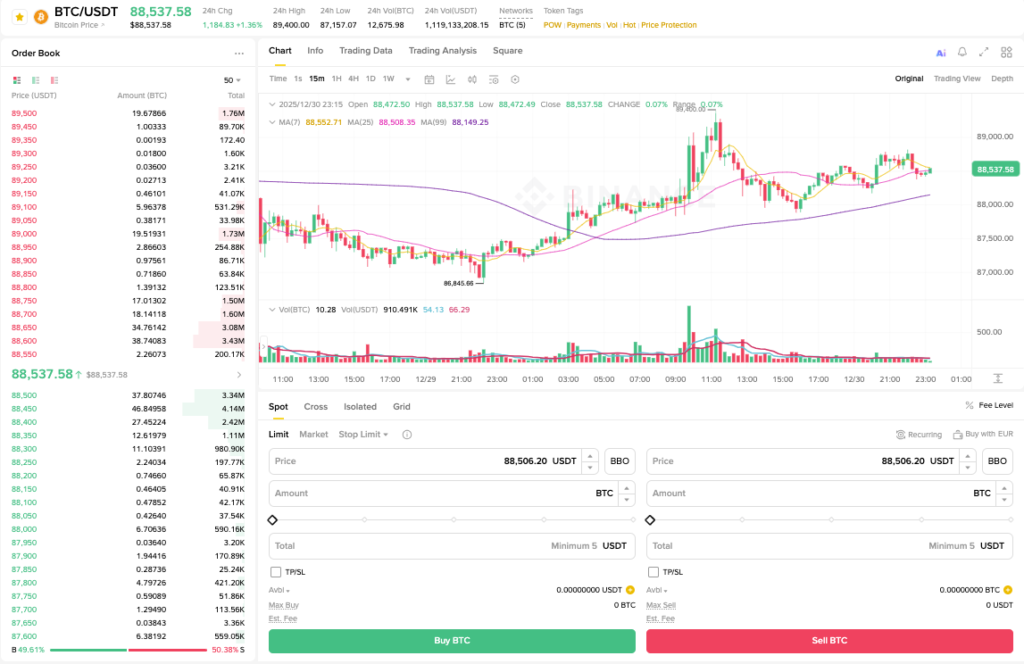
An important step in understanding what are crypto exchanges is to become familiar with the trading interface. This page can often seem complicated for beginners. In this section, we break down the main elements you will see on that page and explain what they mean in simple terms.
What Is a Trading Pair?
A trading pair shows which two assets can be traded against each other on a crypto exchange. It tells you what you are buying and what you are paying with.
For example, in the BTC/USDT trading pair, Bitcoin is being traded against the stablecoin USDT, meaning you are buying or selling Bitcoin using USDT.
Trading pairs help organize markets and set prices. The price you see for a trading pair reflects how much of the second asset is needed to buy one unit of the first. Once you understand trading pairs, reading exchange prices and placing trades becomes much easier.
What Is an Order Book?
The order book is a list of buy and sell orders on an exchange. Buy orders show how much buyers are willing to pay to buy the asset, while sell orders show at which price sellers are ready to sell their assets. When a buy and sell order match, a trade occurs.
Market Orders vs Limit Orders
The market order buys or sells a cryptocurrency instantly at the current price. On the other hand, the limit order allows users to set a specific price at which they want to buy or sell. Beginners usually start with market orders because they are simpler.
Liquidity and Fees
Liquidity refers to how easily an asset can be traded without affecting its price. High liquidity usually means lower price swings.
Fees are charged for executing trades. Both centralized and decentralized exchanges charge fees.
Bottom Line
Crypto exchanges play a central role in the crypto ecosystem. They make it possible to buy, sell, and trade digital assets, and they act as the bridge between traditional finance and blockchain technology.
Understanding what are crypto exchanges, and the difference between centralized and decentralized platforms, helps users make safer and smarter decisions.
For beginners, starting with a reputable centralized exchange is often the easiest option, while decentralized exchanges offer greater control for those ready to explore further.