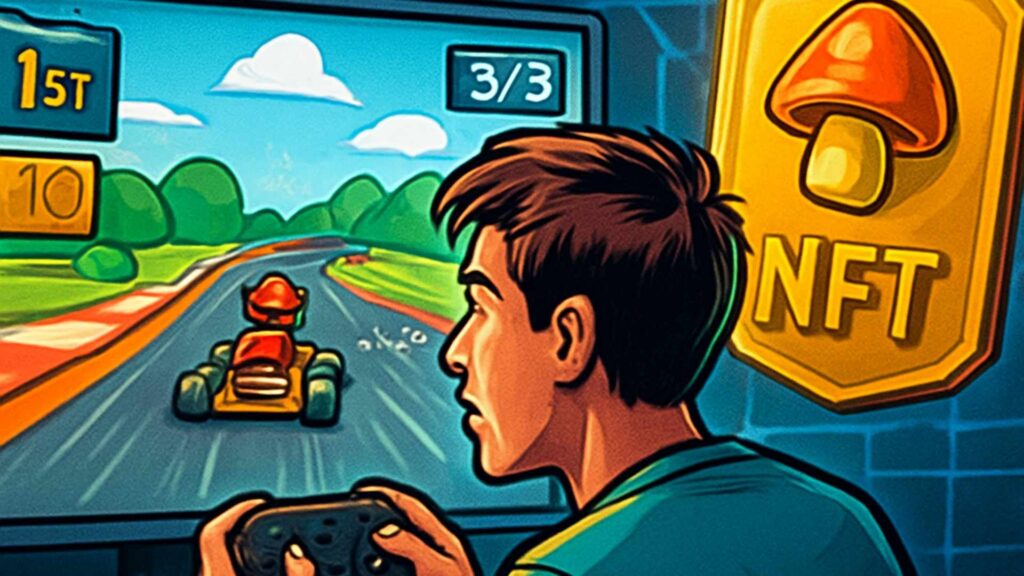
Gaming is evolving, and over the last few years, we’ve seen the emergence of new terms, such as web3 gaming, play-to-earn, and NFT gaming, being frequently used in conversations around video games. As interest grows, so does confusion. But let me reassure you; all these terms fall under the same umbrella: “web3 gaming”. So, what is web3 gaming?
In this beginner-friendly guide, we’ll explain the concept step-by-step, using clear language and practical examples. No technical knowledge is required.
What Is Web3 Gaming?
Web3 gaming refers to video games that use blockchain technology to give players real ownership of in-game assets. Instead of items being fully controlled by the game publisher, assets like skins, characters, or virtual land are directly owned by the player.
Here’s a simple explanation of this concept:
Consider a traditional online game. You may spend hours unlocking items or money to buy cosmetic skins, but at the end of the day, these assets only exist inside the game.
If the game shuts down or your account is lost, it all disappears. In Web3 gaming, those same assets can live outside the game in a digital wallet, remaining yours even if you stop playing.
So, the core idea to keep in mind for anyone asking what is web3 gaming is the shift in ownership from the publisher to the player.
Important to know
As mentioned in our introduction, it’s worth clarifying the terminology. Web3 gaming, blockchain games, NFT gaming, and crypto gaming are often used interchangeably. In simple terms, if a game uses NFTs or crypto assets to give players ownership, it usually falls under all of these categories.
How Does Crypto Gaming Work Behind the Scenes?
At first glance, crypto gaming doesn’t look very different from traditional gaming. You still play, progress, and unlock content. The difference happens behind the scenes, where blockchain technology manages ownership and transactions.
Blockchain, NFTs, and Games: How Are They Linked?
In a web3 game, blockchain acts as a public database to record who owns what, while In-game assets are often created as NFTs, making them unique and traceable.
Therefore, when blockchain and NFTs are used in a crypto game, these 3 elements combined allow digital items to be owned, traded, and verified without relying on a central authority.
In many modern blockchain games, this process is mostly invisible to players. NFTs and wallets operate quietly in the background, allowing players to focus on gameplay while the blockchain handles asset ownership.
NFT Gaming Development Platforms
NFT gaming development platforms are blockchain-based ecosystems that host multiple video games. They work in a similar way to traditional platforms like Steam, but with built-in blockchain features.These platforms simplify NFT gaming development by offering tools for asset creation, wallets, and in-game marketplaces. They also help developers bring games on-chain while giving players access to shared NFT ecosystems.
However, despite being accessible on multiple blockchains simultaneously and the regular release of new innovative features, these platforms haven’t had the expected adoption so far, and many projects are struggling financially. We are yet to see a viable and attractive long-term business model that would encourage giant game development companies to shift from traditional gaming to Web3.
Benefits of Blockchain Gaming: How Web3 Could Change Gaming
The growing interest in Web3 gaming comes from the potential advantages it offers compared to traditional gaming models.
The Difference Between Web2 and Web3 Gaming
In Web2 gaming, everything is centralized. Game publishers control the servers, the economy, and all in-game assets. Players pay for content but never truly own it.
That is why it is essential to understand what is Web3 gaming, as it introduces a more decentralized approach. Assets can exist independently of the game, economies can be more transparent, and players gain more control over what they earn and collect. This fundamental shift is what separates Web3 gaming from traditional gaming.
The Potential Benefits
The benefits of blockchain gaming include true digital ownership, open marketplaces for trading items, and player-driven economies. Developers can experiment with new monetization models, while players can keep and trade assets beyond a single game.
Instead of progress being locked inside one platform, time spent gaming can potentially translate into lasting digital value.
Why Blockchain Games Aren’t Mainstream Yet
Despite its potential, Web3 gaming has not yet reached mainstream adoption. Here are some of the main reasons:
Accessibility. Wallets, transaction fees, and onboarding can still feel complicated for beginners. Gamers want to play games without having to deal with blockchain technicalities.
Gameplay. Early crypto gaming projects focused too much on earning mechanics and not enough on fun. This created skepticism among traditional gamers. That said, things are improving; recent web3 gaming news shows a clear shift toward games that prioritize gameplay first, such as Off The Grid and Citadels, using blockchain as a supporting feature rather than the main selling point.
Scalability and performance. This is one of the main limitations of blockchains. Game developers often wonder if the blockchain can handle mass adoption with thousands of transactions executed every second. Some solutions, such as Avalanche subnets, have emerged along the way, but they have yet to prove their efficacy in a mainstream adoption environment.
Revenue. While it is important to consider the point of view of game developers and gamers, it is also crucial to ensure that NFT gaming development platforms generate revenue and have a viable business model long-term.
Bottom Line
So, what is web3 gaming really about? At its core, it aims to change how ownership works in video games. It doesn’t seek to replace traditional gaming overnight, but to offer an alternative model where players have more control.
Crypto gaming is still evolving, and not every project will succeed. However, as technology improves and developers learn from early mistakes, Web3 gaming could become a natural extension of the gaming industry.
For beginners, the key is understanding the concept without getting lost in the hype. Web3 gaming is less about speculation and more about rethinking the relationship between players and the games they play.